
Gaza Appeal: Please donate today
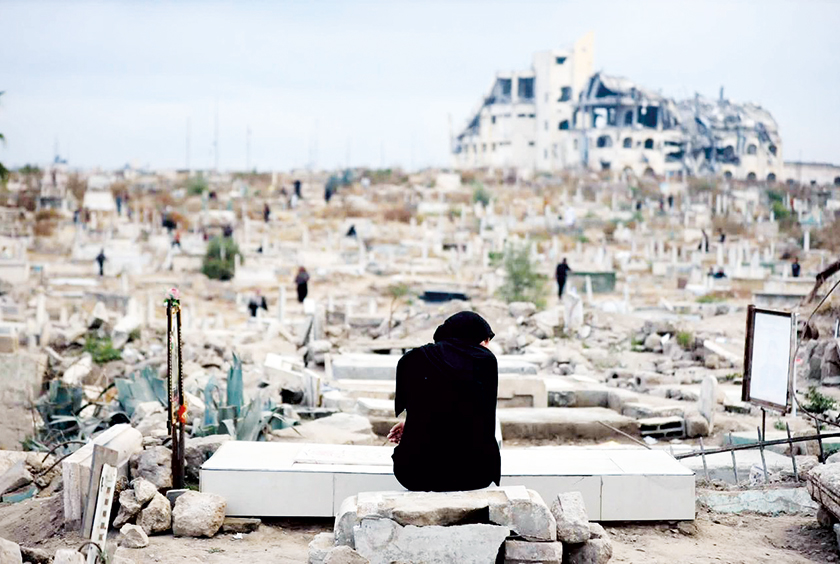
The population in Gaza is experiencing a humanitarian disaster. They are facing devastating loss and overwhelming need.
Other ways to donateGaza Appeal: Please donate today
The population in Gaza is experiencing a humanitarian disaster. They are facing devastating loss and overwhelming need.
Other ways to donateThe genocide is not over


Your support is needed now. Help us respond.
The ceasefire has not brought peace. Gaza’s children, families and communities urgently need our support.
With your help, Amos Trust’s partners are providing:
- trauma therapy for children and parents in Gaza, helping them process unimaginable loss and begin to heal
- tent schools for children who have had no education since October 2023
awareness training to help children recognise unexploded ordnance and avoid further tragedy - breast cancer screening and women's health support at Al-Ahli Hospital in Gaza City
- practical support, bursaries and income-generating projects for at-risk communities in the West Bank.
None of this is possible without you.
Please donate today and help our partners — who have lived through this genocide themselves — continue their vital work.
Gaza Appeal: Please donate today
This ceasefire is not the end of Gaza’s struggle — we are hoping it’s the beginning of rebuilding. Please give what you can today to help Palestinians heal, rebuild and reclaim hope.
Other ways to donateGaza Appeal: Please donate today
This ceasefire is not the end of Gaza’s struggle — we are hoping it’s the beginning of rebuilding. Please give what you can today to help Palestinians heal, rebuild and reclaim hope.
Other ways to donateOur Gaza appeal • Your donations at work
Your support has provided life-saving food, medical care, trauma support and education — bringing hope to Gaza.
59%
59% has been spent on food (hot meals and food parcels), water and milk supplements.
19%
19% has been spent on medical support and psychosocial trauma support.
12%
12% has been spent on winterisation, providing children’s clothes and blankets.
10%
10% has been spent supporting young journalists and education projects.



Appeal update
June 2026
“Gaza has shown the world what the world was not ready to see.” Dr Khawla Badwan, poet and academic, quoting her 10-year-old son
Gaza
The genocide is not over. 60% of Gaza is completely controlled by the Israeli military, and the Israeli Prime Minister has announced that the yellow demarcation line will be extended to cover 70% of Gaza.
No Palestinians live in the Israeli-controlled areas, and no buildings remain there. Two million people have been forced into a tiny strip of coastal land, living in vermin-infested tents and partially demolished buildings with little or no water supply or sanitation.
Building materials are still not allowed in. Food and water shortages remain widespread, Israeli forces continue to carry out daily attacks, and 1,000 Palestinians in Gaza have been killed by Israel since the ceasefire.
“People think that with the ceasefire, things became normal. There is an existential threat. 60% of Gaza is under direct occupation, the population is squeezed into the western side. Most of the agricultural area is occupied. This is catastrophic. Peace is not there. People are still being killed. We are not forgetting.” Nader Abu Amsha, Director, DSPR

A young girl drinks clean water from a plastic bottle in Gaza
One million children in Gaza are acutely traumatised. 93% of schools have been destroyed or badly damaged, and Gaza remains littered with unexploded ordnance. UNMAS estimates that over 70,000 tonnes of explosives were dropped on Gaza — though other sources put the figure closer to 200,000 tonnes — and that 10–12% of this failed to explode.
West Bank
In the West Bank, annexation is gathering speed, as is the brutality of settler and Israeli Defence Force attacks and the deadly impact of apartheid legislation. Area C makes up nearly 70% of the West Bank. It is under full Israeli control, home to up to 300,000 Palestinian residents across 500 small communities, and 500,000 illegal Israeli settlers across 125 settlements.
In the first six months of 2026, there have been over 1,000 settler attacks on 230 communities in Area C — six a day — damaging crops and property, seizing land and physically abusing the local population, all with legal impunity.
The violence has not been restricted to settlers. The Israeli Defence Force has killed 57 people, including 13 children, so far this year, and there has also been a rapid rise in home demolitions and land seizures. Over 2,250 Palestinians have been displaced so far in 2026 — already exceeding the combined total displaced across 2024 and 2025.
The economy is also teetering on the edge of collapse. Restrictions on movement, land seizures and the withholding of work permits and tax revenue from the Palestinian Authority have crippled the Palestinian economy. 30% of the population is unemployed, and the Palestinian Authority is no longer able to fund public services such as schools and hospitals or to pay its employees.
Amos Trust is now focusing its support on Gaza
Trauma therapy
Trauma therapy for children and parents, in partnership with our long-term partner DSPR, now that the situation is more stable and they’re able to do deeper work. Because the trauma in Gaza is ongoing rather than past, formal diagnoses of post-traumatic stress aren’t possible — but our partners are still able to help children and their mothers talk about the horror and loss they have experienced, and find ways to begin to self-regulate.
Education
Education through three tent schools, providing basic literacy, numeracy and language skills for 180 children aged 5 to 8 each year, alongside a joint initiative with Taawon UK that combines tent schools with psychosocial support. The children involved in these programmes have either never been to school or have not attended since October 2023.

A young boy smiling for the camera while collecting water in Gaza
Unexploded Ordinance
Raising awareness among children across Gaza of the dangers of unexploded ordnance (bombs). We are supporting Ajyal Association in a one-year programme to teach 100,000 children how to recognise unexploded ordnance and booby traps, and to produce resources to raise awareness among 500,000 displaced people.
Women’s Health
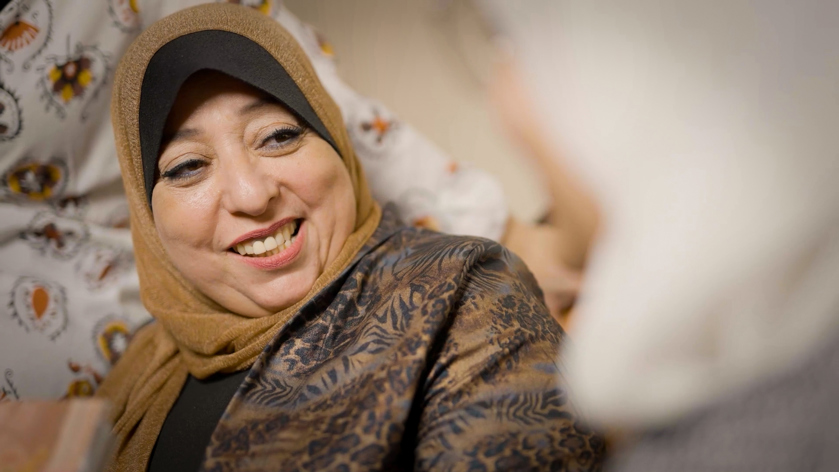
Breast cancer screening and a women’s health programme with Al-Ahli Hospital in Gaza City. This small hospital provided essential trauma surgery and care throughout the war, despite being bombed eight times and suffering extensive damage. Now that the situation has stabilised, the hospital has asked us to support the resumption of its vital screening programme — no cancer care was available during the war, and there are still very few, if any, chemotherapy drugs available in Gaza.
Because the trauma in Gaza is ongoing rather than past, formal diagnoses of post-traumatic stress aren’t possible — but our partners are still able to help children and their mothers talk about the horror and loss they have experienced, and find ways to begin to self-regulate.
Young journalists
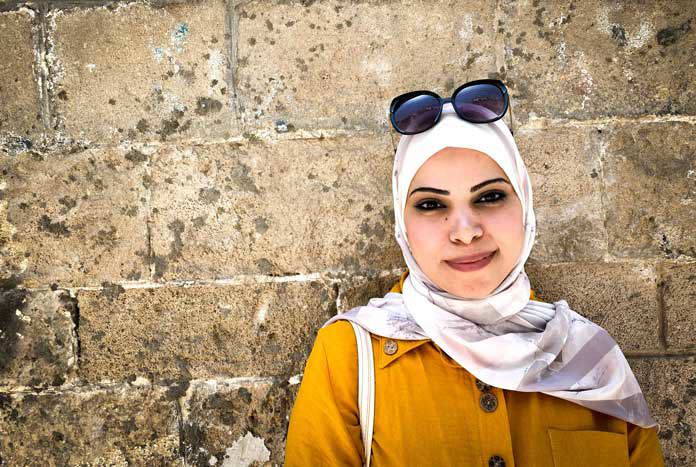
Supporting the young writers who have become Gaza’s journalists. Since October 2023, no international media have been allowed into Gaza, and 260 journalists have been killed. The young writers trained by our long-term partner We Are Not Numbers have become Gaza’s journalists and continue to play a vital role in documenting the ongoing genocide.
These programmes are all delivered by local organisations, whose staff have lived through the genocide, lost family members and colleagues, and been displaced multiple times themselves.
West Bank
- Sumud
Working with our partners HIRN and Holy Land Trust to support communities in Area C, particularly in Masafer Yatta and the southern West Bank. Both organisations respond to requests for practical support, education bursaries and assistance with setting up income-generating projects in these at-risk communities. - Community Arts Programme
Bil Fann Nasmud supports young performers (musicians, poets and storytellers) who have had no income since October 2023 to perform at community-building events and foster hope across the West Bank. - Creativity
Alrowwad continue to run dance, music and drama programmes for children and young people from Bethlehem’s refugee camps, particularly Aida Camp, while also responding to the wider needs of communities where many residents have had no work since October 2023.
Gaza Appeal: Please donate today
This ceasefire is not the end of Gaza’s struggle — we are hoping it’s the beginning of rebuilding. Please give what you can today to help Palestinians heal, rebuild and reclaim hope.
Other ways to donateGaza Appeal: Please donate today
This ceasefire is not the end of Gaza’s struggle — we are hoping it’s the beginning of rebuilding. Please give what you can today to help Palestinians heal, rebuild and reclaim hope.
Other ways to donateJoin our mailing list
Words of hope
Get our emails direct to your Inbox with updates about all our campaigns, trips and events.